Redesigning a cabin crew app for work that happens during real flights
I redesigned an existing crew tool around a new structure while keeping the patterns cabin crews already relied on. The hard part was improving complex in-flight flows without asking crews to relearn familiar tasks during service.
Crews use the app for flight details, passenger handling, seat-map actions, shared tasks, manuals, and evaluations. The interface had to stay readable through interruptions, time pressure, and constant movement onboard.
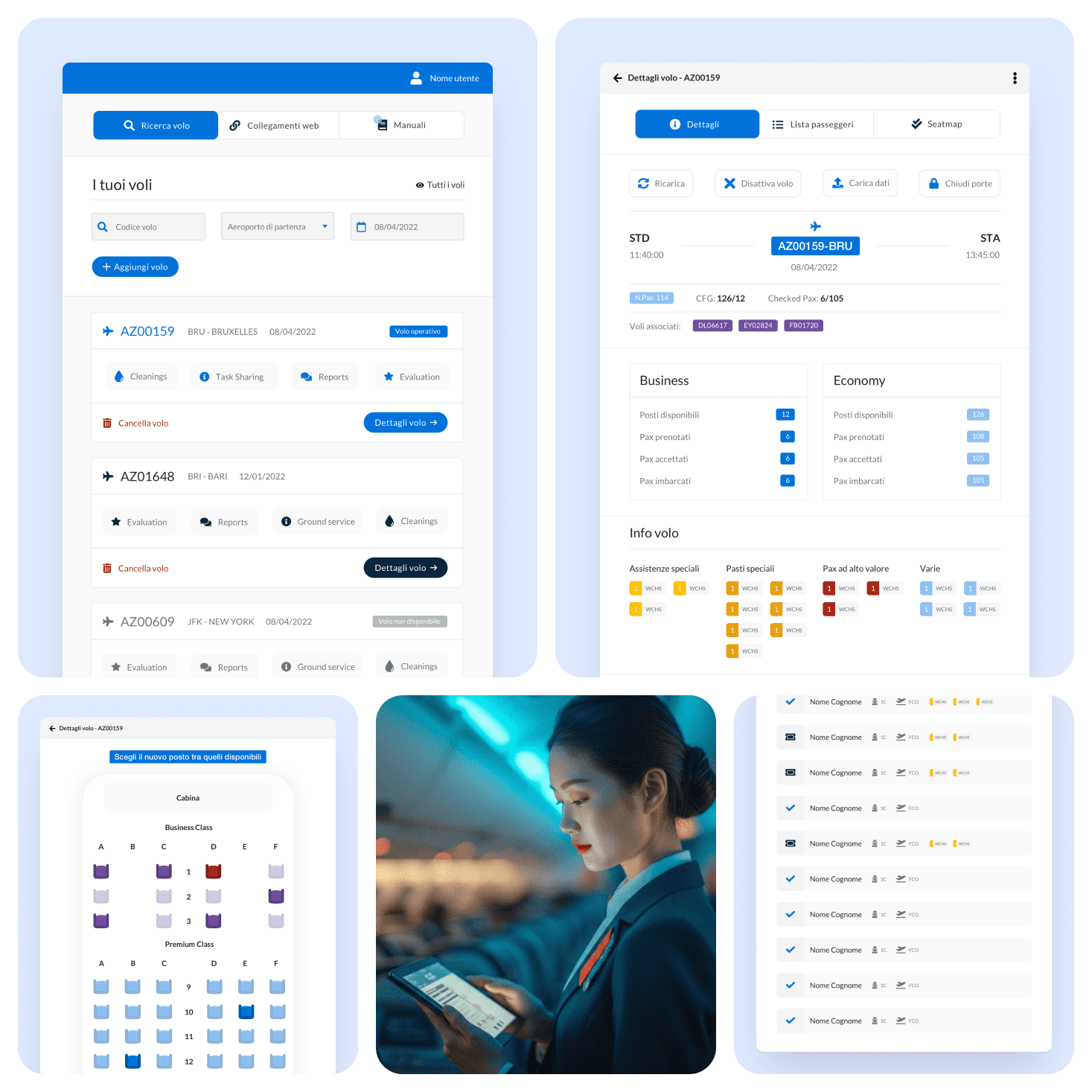
A new daily crew tool: same operational logic, rebuilt for speed and clarity
Chameleons is a mobile-first operational app used by cabin crews during real flights. It brings flight context, passenger handling, seat-map actions, task sharing, manuals, and evaluation flows into one working system.
This was not a net-new product. It was a redesign and rebuild of an existing application that had reached its limits.
The old app contained important operational logic, but the product structure was no longer enough for the pace and complexity of daily onboard work.
The challenge was to rebuild the experience from zero while studying the old app carefully, so crews could move faster without losing the usability patterns they had already learned.
- -Keep the product reliable under real flight pressure, where crews manage many people, requests, and interruptions at once
- -Make key flows cleaner and more fluid without forcing crews to relearn the whole system
- -Prioritize simplicity and speed over visual flashiness
I led the product design direction across the rebuild, defining how the new structure could improve daily operations without breaking continuity with the old tool.
- -Restructured the product architecture from the ground up
- -Redesigned the dashboard, passenger workflows, seat handling, task sharing, manuals, and evaluation flows
- -Kept the interaction model close to real crew behavior and time-critical onboard decisions
The work started with careful analysis of the existing product: what crews already understood, where work slowed down, and which patterns still needed to stay familiar.
From there, I redesigned the experience around fast scanning, short paths to action, and a more legible operational hierarchy across screens.
The product keeps the same operational goals, but in a structure that is easier to read, faster to use, and more consistent across tasks.
- -Flight overview gives crews immediate situational awareness
- -Passenger handling supports faster triage and follow-through
- -Seat-map actions stay close to the decisions crews need to make in the moment
- -Task sharing, manuals, and evaluations remain accessible without fragmenting the experience
The rebuild was not only about improving single screens. It was about creating one operational language across the whole product.
That meant balancing two needs at once: introducing a cleaner system and preserving the familiarity that makes a tool usable in live service conditions.
The redesigned app keeps frequent actions easy to find and familiar tasks familiar. It is direct by design because visual novelty would have made the work slower.

Working on similar challenges?
I design digital products that bring clarity to complex services, from concept to release.